


The most effective, attractive way to replace a missing tooth – or teeth – is with a dental implant. While efforts to improve smiles date back to ancient times (bamboo pegs were used to replace missing teeth in China over 4,000 years ago!), today’s dental implants are crafted from durable titanium or zirconia.
When the procedure is performed by an expert like Naperville dental implants dentist Dr. Anthony LaVacca, your dental implants can last a lifetime and allow you to smile, eat and speak with confidence because they fuse to the jawbone and lock in place.
To learn more about dental implants in Naperville, book an appointment online or by calling us at (630) 848-2010.
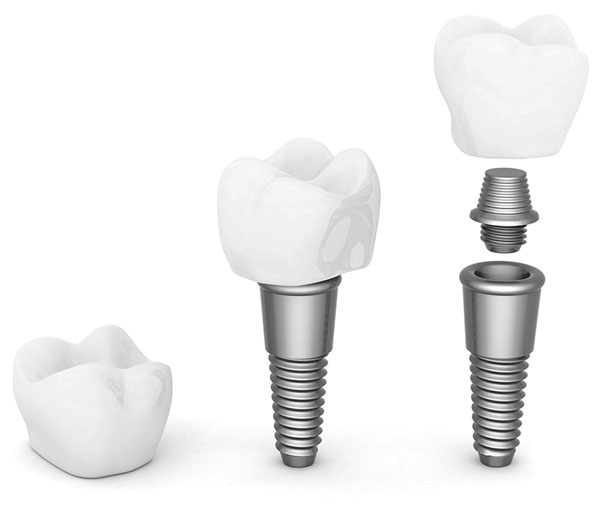
How Dental Implants Work
An implant looks, feels and functions like a natural tooth and even has a root form. The root form is surgically placed in your jawbone and after the jawbone heals, typically in two to six months, a permanent replacement tooth, called a crown, is secured to it.
At Naperville Dental Specialists, we offer a variety of options, including All-on-4, Teeth in a Day, full-mouth restoration and zirconia implants. At your consultation, we’ll do a thorough examination and evaluation to help you decide on the best choice for your smile. The advantages of dental implants include:
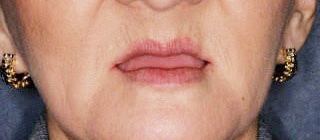
- They help prevent jawbone shrinkage, which occurs gradually when teeth are missing. If you have lost all of your teeth, this shrinkage will cause your face to sink in and appear shriveled. Dental implants stimulate bone growth and ward off this facial sagging, helping you appear more youthful.
- They’re surgically placed in your jawbone, so they look and feel natural, allowing you to speak, chew and smile as you normally would.
- Unlike a dental bridge, no work on adjacent teeth is required.
- When your dentures are secured to dental implants, you don’t have to worry they’ll fall out and there won’t be any embarrassing slippage.
Treatment Considerations
You’ll meet with board-certified prosthodontist Dr. Anthony LaVacca for a consultation. Using i-CAT™ technology, we’ll obtain high-definition, 3D images.
Dr. LaVacca will examine your mouth and medical history and review the CT scans to identify the exact location of your sinuses, nerve canals and tooth structure, as well as evaluate your bone structure. This will help him determine the optimal placement for your implants and see if you have enough bone density for the treatment, or if bone grafting will be required.
He’ll discuss the pros and cons of the different options for tooth replacement.
Dr. LaVacca has the necessary training to complete the entire procedure, including bone grafting, if it’s necessary. He’ll perform the surgery and place the root form in your jawbone under the gum line. You may receive a temporary replacement for your tooth during the healing period.
You’ll wait two to six months for the jawbone to heal and fuse with the implant. Then, we’ll use our iTero® scanner or TRIOS® scanner to take digital impressions to create a customized, lifelike crown to serve as your permanent replacement tooth.
Pre- + Post-Op Care
Dr. LaVacca will give you detailed instructions to follow prior to your Naperville dental implant surgery to ensure the best possible results. There is very little downtime after the procedure and most of our patients are back at work in two or three days.
There may be minor swelling and soreness for one to two days after surgery. You can reduce this by holding an ice pack on your face in the implant area for 20 minutes on and 20 minutes off for the first 24 hours.
You may be prescribed pain medication to deal with any discomfort. Be sure to use it as directed. Oral hygiene is crucial to the success of implant surgery. Follow our aftercare directions and once you receive the go-ahead, be sure to brush and floss diligently.
Dental Implants vs. Dentures
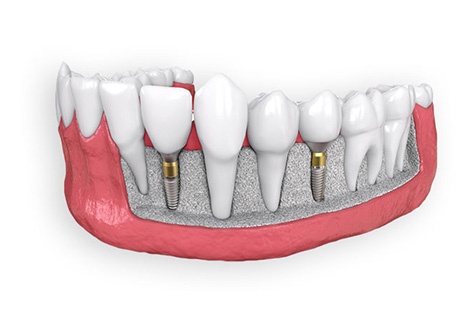
Dental Implants
- Prevent jawbone shrinkage, which wards off facial sagging, giving you a more youthful appearance
- Look and function just like your natural teeth
- Fuse with the jawbone so they’re comfortably and securely attached
- Restore your chewing ability, allowing you to eat whatever you want
- Though more expensive, they can last a lifetime
- Easy to clean! Care for them as you would your regular teeth
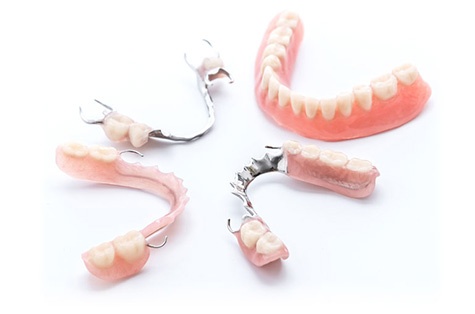
Dentures
- Jawbone shrinkage will occur causing your face to sink in and look shriveled
- Can be uncomfortable and feel fake
- Often slip and slide around causing irritation and embarrassment
- Certain foods may be off limits as chewing is more limited
- Cheaper but usually must be replaced at some point
- Must be removed to be cleaned, which can be a hassle

How Much do Dental Implants Cost?
The cost of dental implants varies depending on your needs and the type you choose. We do offer affordable dental implants and options such as All-on-4®, where we replace all of your missing teeth with just four implants without resorting to bone grafting.
At your consultation, we’ll assess your needs and help you decide on the best choice for your smile. We’re transparent about our fees and we’ll give you your costs upfront so there are no surprises.
We accept most insurances as well as third-party financing to help make the cost of dental implants work for your budget.
Dental Implants Before & After
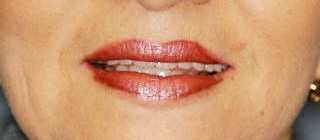
Dental implants
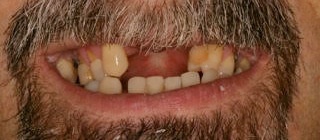
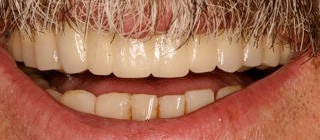
Cleft palate and implants and crowns
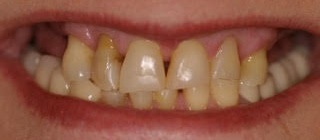
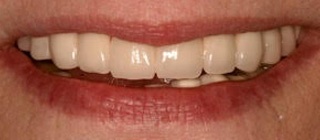
Dental Implants and dental crowns
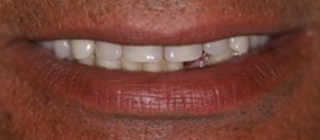
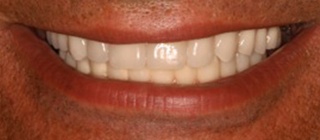
Dental implants upper and lower
Expert Care for Outstanding Results
Dr. Anthony LaVacca is a renowned implant dentist and the advanced education and specialty training he received to become a board-certified prosthodontist give him an in-depth understanding of surgically placing implants in a way that’s safe and effective.
To find out if dental implants are right for you, book your complimentary consultation at Naperville Dental Specialists today online or by calling us at (630) 848-2010.
36 M
More than 36 million people in United States are missing all of their teeth.
98%
Studies show the success rate of dental implants, when properly placed, is estimated to be 98%.
3 M
Three million Americans have implants and the number is increasing by 500,000 annually.
Read More Reviews
Reviews
Here’s what our patients have to say.
See More Results
Results
See our real-life smile transformations.
Book An Appointment